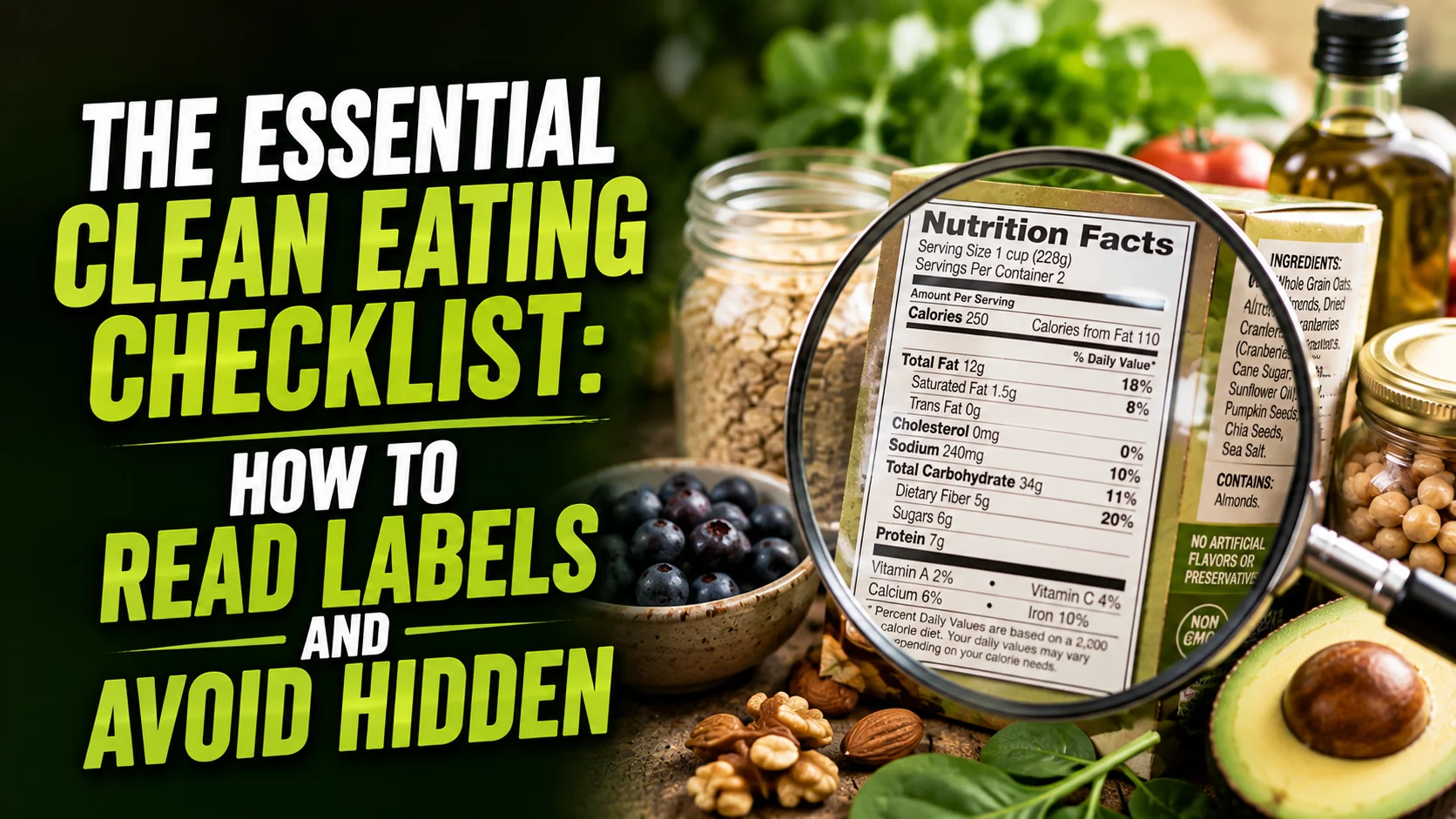
Grocery store shelves are filled with colorful packages promising optimal health and energy. However, behind attractive marketing claims often lies a very different reality. Food manufacturers routinely disguise artificial additives, chemical preservatives, and refined sweeteners under complex chemical names. Consequently, even seemingly healthy options can disrupt digestion and trigger internal stress. Mastering label reading using a reliable clean eating guide is essential for protecting your body. By learning to decode ingredient panels, you can easily avoid hidden toxins and make empowered choices. This comprehensive checklist provides practical strategies to inspect labels, eliminate harmful additives, and build a clean diet that supports lasting vitality.
Why Ingredient Panels Matter More Than Front-of-Package Claims
Front-of-package labels are designed primarily for marketing rather than health transparency. Buzzwords like “All-Natural,” “Multigrain,” or “Heart Healthy” frequently mislead shoppers into buying ultra-processed items.
Checking the back panel gives you the real story:
Ingredient Order Reveals Concentration: Ingredients are listed in descending order by weight. If refined sugars or seed oils appear in the first three items, put the product back.
Short Ingredient Lists Signify Whole Foods: Pure, nourishing foods require minimal processing. Aim for packaged goods with fewer than five single-ingredient components.
Chemical Alias Red Flags: Manufacturers frequently split added sugars into multiple chemical aliases to hide their total volume on the ingredient list.
Unmasking Hidden Toxins and Refined Additives
To safeguard your metabolism, you must recognize the most harmful additives found in everyday grocery products. Identifying these ingredients helps you choose better whole-food options.
| Hidden Toxin / Additive | Common Food Sources | Clean Whole-Food Alternative |
|---|---|---|
| High Fructose Corn Syrup (HFCS) | Sodas, condiments, canned fruit | Fresh whole fruit, raw honey, pure maple syrup |
| Hydrogenated Trans Fats | Packaged baked goods, margarine | Cold-pressed coconut oil, grass-fed butter |
| Artificial Food Dyes (Red 40, Yellow 5) | Energy drinks, candy, cereal | Natural colorings from beet juice or turmeric |
| Industrial Seed Oils (Canola, Soybean) | Salad dressings, potato chips | Extra virgin olive oil, avocado oil |
Healthy High Fructose Corn Syrup Alternatives
High fructose corn syrup is heavily refined and places significant stress on the liver. Replacing processed syrups with natural high fructose corn syrup alternatives keeps your energy stable while offering valuable micronutrients:
Raw Unfiltered Honey: Contains beneficial enzymes, trace minerals, and natural antioxidants that support gut health.
Pure Organic Maple Syrup: Delivers essential manganese and zinc while providing a rich, satisfying flavor for baking.
Mashed Fresh Fruit: Bananas, dates, and berries provide natural sweetness alongside essential soluble fiber that slows glucose absorption.
Organic Stevia or Monk Fruit: Pure plant extracts offer calorie-free sweetness without triggering insulin spikes or blood sugar fluctuations.
4 Practical Steps to Master Label Reading Today
Building a clean grocery routine becomes second nature when you follow these four straightforward steps:
Ignore the Front Claims: Turn the package around immediately and focus exclusively on the ingredient list and nutrition facts panel.
Apply the 5-Ingredient Rule: Whenever possible, choose products that contain five or fewer easily recognizable ingredients.
Check for Hidden Sugars: Watch out for ingredients ending in “-ose” (like dextrose or sucrose), as well as maltodextrin and syrups.
Select Unrefined Fats: Ensure added oils are cold-pressed options like extra virgin olive oil rather than refined seed oils.
Building Your Personalized Wellness Strategy
Reading labels correctly is a crucial skill for long-term health. However, true health transformation requires integrating label awareness into a broader, tailored approach.
To learn how whole-food choices calm cellular stress and lower systemic risk, read our guide on how to combat systemic inflammation with an anti-inflammatory diet plan.
Furthermore, designing a sustainable lifestyle requires aligning your daily meal preparation with your exact biometric needs. Develop your tailored nutrition targets with a personalized wellness strategy using our free AI meal tool to reach your goals.
For local health updates, explore our Beauty and Mindful location profile.
Frequently Asked Questions
What is the most important rule in a clean eating guide?
The fundamental rule of any clean eating guide is to prioritize single-ingredient whole foods. When buying packaged items, focus on short ingredient lists free from artificial additives and refined sweeteners.
What are the best high fructose corn syrup alternatives for baking?
Pure organic maple syrup, raw honey, mashed dates, and coconut sugar are excellent natural alternatives. They provide natural sweetness alongside trace minerals and antioxidants.
Why are artificial dyes harmful in food products?
Synthetic food dyes (like Red 40 and Yellow 5) are petroleum-derived compounds. They can trigger hyperactive behavior in children and cause inflammatory skin reactions or gut irritation in sensitive individuals.
How do I know if an ingredient is a hidden sugar?
Look for words ending in “-ose” (such as fructose, sucrose, and maltose) on the ingredient label. Additionally, watch out for syrups, juice concentrates, and maltodextrin.