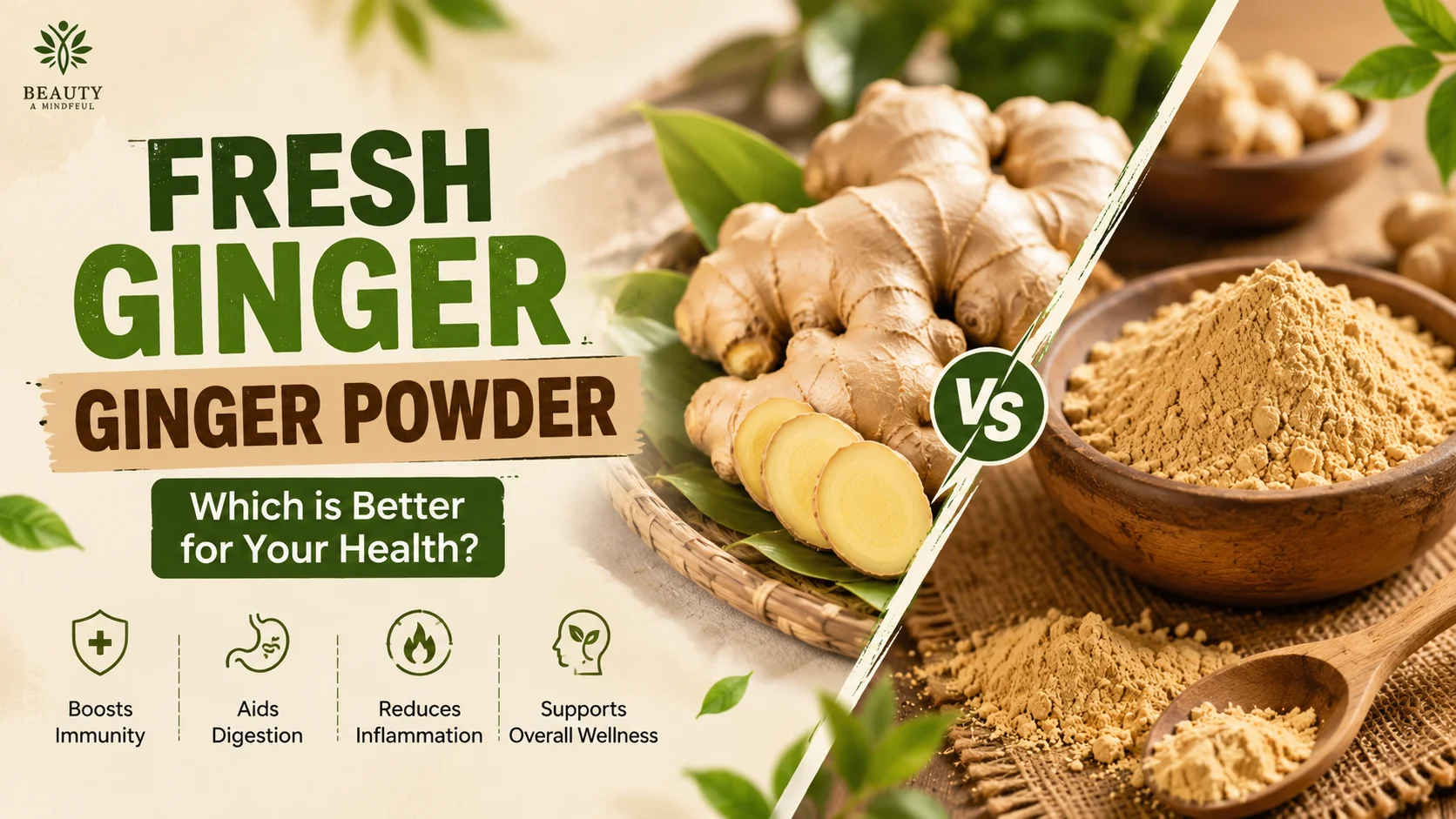
When it comes to boosting your wellness routine, ginger is one of the most powerful, science-backed herbs you can add to your diet. However, a common question always arises when building healthy habits: fresh ginger vs ginger powder—which one is truly better for your health?
While both forms come from the exact same root (Zingiber officinale), the dehydration process changes their chemical makeup. Consequently, they offer completely different strengths depending on whether you are trying to soothe your stomach, reduce joint pain, or maximize weight loss.
The Core Differences: Fresh Ginger vs Ginger Powder
To understand ginger vs ginger powder, it helps to look at how their active healing compounds change when dried.
Fresh Ginger is packed with gingerol, a volatile liquid antioxidant that gives fresh ginger its sharp, spicy kick. Gingerol is highly praised for relieving nausea, supporting digestion, and lowering acute inflammation.
Ginger Powder undergoes a drying heat process that converts gingerols into shogaols. Shogaols are much more chemically potent than gingerols, offering significantly stronger anti-inflammatory and antioxidant properties that protect cells from aging. According to comprehensive nutritional reviews published by the National Institutes of Health (NIH), these active compounds provide powerful defensive shields against oxidative stress throughout the body.
Fresh ginger is superior for relieving nausea, morning sickness, and immediate digestive discomfort due to its high gingerol content. Conversely, ginger powder is more concentrated and effective for long-term chronic pain, inflammation, and metabolic support because of its elevated shogaol levels.
Nutritional and Potency Comparison Table
| Feature / Benefit | Fresh Ginger Root | Dried Ginger Powder |
| Primary Compound | Gingerol (Best for digestion & nausea) | Shogaol (Best for inflammation) |
| Potency Level | Milder, contains natural water weight | Highly concentrated (1/4 tsp equals 1 tbsp fresh) |
| Shelf Life | 2–3 weeks in the refrigerator | Up to 1 year in an airtight container |
| Best Used For | Morning smoothies, juices, and hot teas | Baking, herbal capsules, and dry spice rubs |
Health Profiles: Fresh Ginger vs Ginger Powder for Targeted Recovery
1. Digestion and Nausea: When to Choose Fresh Ginger over Ginger Powder
If your main goal is to improve gut health or stop stomach upset, raw fresh ginger is the definitive winner. The active gingerols in the fresh root stimulate digestive enzymes and help food move smoothly through the intestinal tract. This prevents bloating and quickly eases nausea, motion sickness, or morning sluggishness.
2. Chronic Inflammation: Why Ginger Powder Outperforms Fresh Ginger
If you are dealing with chronic inflammatory conditions like arthritis, muscle soreness, or joint pain, the powdered spice takes the crown. Because shogaols are highly concentrated in the dried form, they block inflammatory pathways in the body more aggressively than the fresh root can alone.
3. Metabolic Support: Fresh Ginger vs Ginger Powder for Weight Loss
Both forms provide great metabolic support. However, ginger powder is incredibly easy to dose consistently. To speed up your fat-burning potential overnight, you can easily add a quarter-teaspoon of ginger powder into a warm bedtime drink for weight loss to stimulate thermogenesis while you sleep.
How to Convert Fresh Ginger to Powdered Ginger in Recipes
Because powdered spice is significantly more concentrated than the raw root, you cannot swap them evenly in your daily routine. Use this exact conversion ratio to keep your intake safe and effective:
1 Tablespoon of Grated Fresh Ginger = 1/4 Teaspoon of Ground Ginger Powder
Daily Dosage Safety Limits
Fresh Root: You can safely consume up to 3 to 4 grams of raw ginger daily.
Powdered Form: Limit your intake to roughly 1/2 to 1 teaspoon daily to avoid mild side effects like heartburn or stomach irritation.
Final Thoughts: The Verdict
When comparing fresh ginger vs ginger powder, the best choice ultimately depends on what your body needs today. Raw fresh ginger is ideal for quick digestive relief, morning sickness, and vibrant culinary flavor. Alternatively, powdered ginger makes an elite addition to your wellness cabinet if you want a potent, convenient anti-inflammatory boost to enhance your long-term natural detox remedies.
To achieve the ultimate approach to clean beauty and health, consider incorporating both forms into your regular lifestyle routine to feed your body balance from the inside out.
Learn more about the importance of regular exercise to boost your metabolic burn.
FAQs
Q: Is ginger powder as healthy as fresh ginger?
A: Yes, ginger powder is just as healthy as fresh ginger, but it serves different wellness purposes. Fresh ginger is rich in gingerol, making it ideal for nausea and digestion. Ginger powder is highly concentrated with shogaol, making it far more potent for reducing chronic inflammation and muscle pain.
Q: Can I use ginger powder instead of fresh ginger for a detox tea?
A: You can use ginger powder instead of fresh ginger, but use much less. Because the powder is concentrated, 1/4 teaspoon of ground ginger replaces a full tablespoon of fresh ginger. Pair it with warm water and lemon for a highly effective morning flush.
Q: Does fresh ginger or ginger powder help more with a natural skincare routine?
A: Both offer incredible benefits. Fresh ginger juice can be used in topical DIY recipes to clear skin blemishes, while consuming ginger powder internally provides the deep cellular antioxidants necessary to support a long-term natural skincare routine.