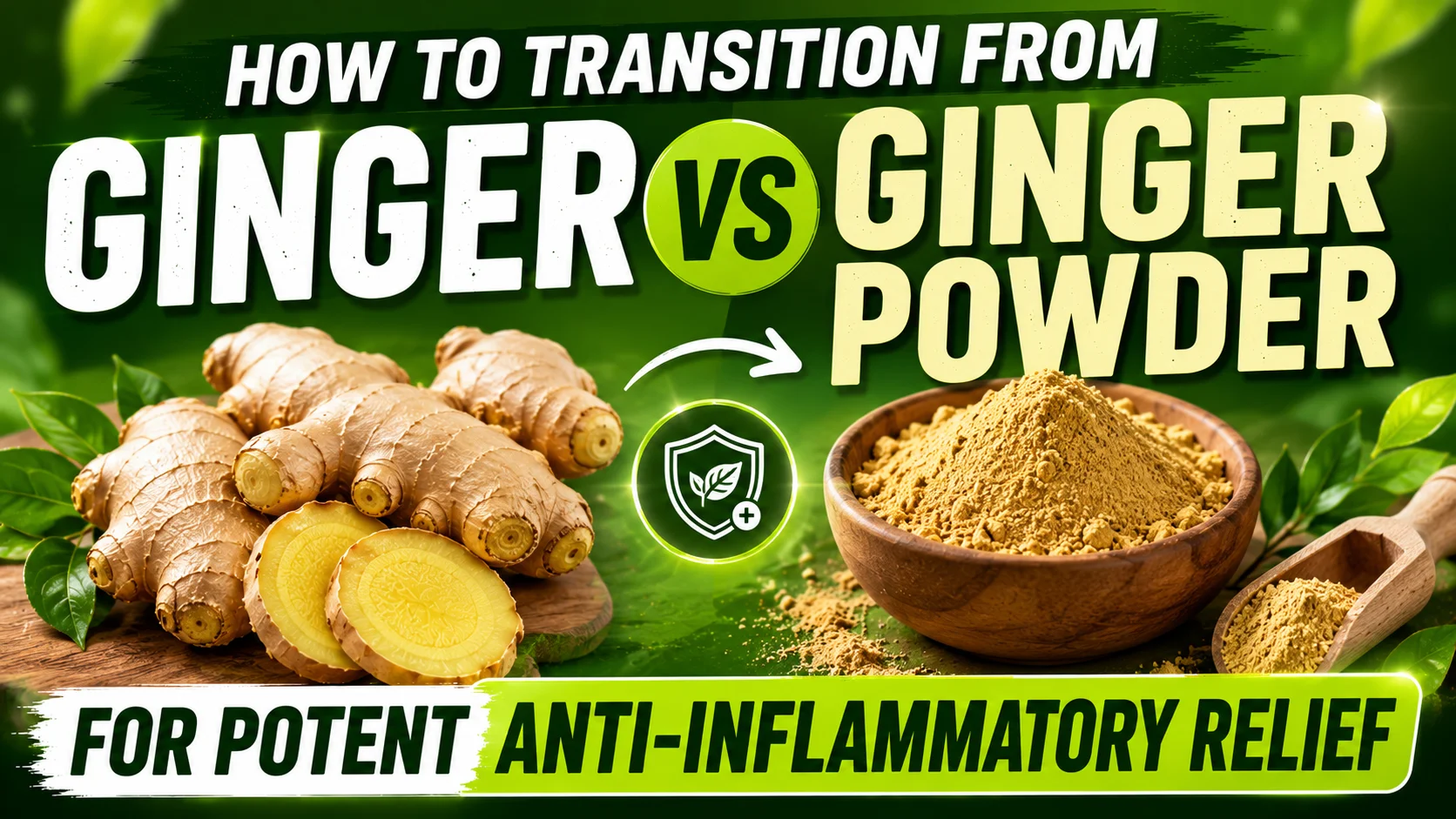
Building a high-performance wellness routine requires more than just picking the right ingredients; it demands knowing how to use them with absolute precision. Ginger has long earned its reputation as an elite anti-inflammatory powerhouse. However, when you are staring at a recipe or designing your morning supplement ritual, navigating the choice between ginger vs ginger powder can feel like a guessing game.
Many people assume these two forms are completely interchangeable in equal amounts. In reality, switching from the raw root to the dried spice completely shifts the chemical concentration and structural potency of your dose. Learning how to transition between fresh ginger vs ginger powder seamlessly ensures your body receives steady, uninterrupted cellular relief every single day.
The Biological Reality: Why a Smooth Transition Matters
The core reason you cannot swap these forms at a simple 1:1 ratio comes down to moisture loss and molecular evolution. The raw root is dense with natural water weight and volatile oils known as gingerols. These compounds are fantastic for calming an upset stomach or relieving sudden nausea.
According to nutritional analyses compiled by the National Institutes of Health (NIH), applying dehydration heat to raw ginger removes the water and transforms those gingerols into highly stable, concentrated antioxidants called shogaols. Because shogaols are structurally far more aggressive at fighting deep tissue inflammation, the dry powder packs a significantly heavier punch per milligram. If you transition blindly without adjusting your measurements, you could easily overwhelm your digestive tract or make your wellness drinks completely unpalatable.
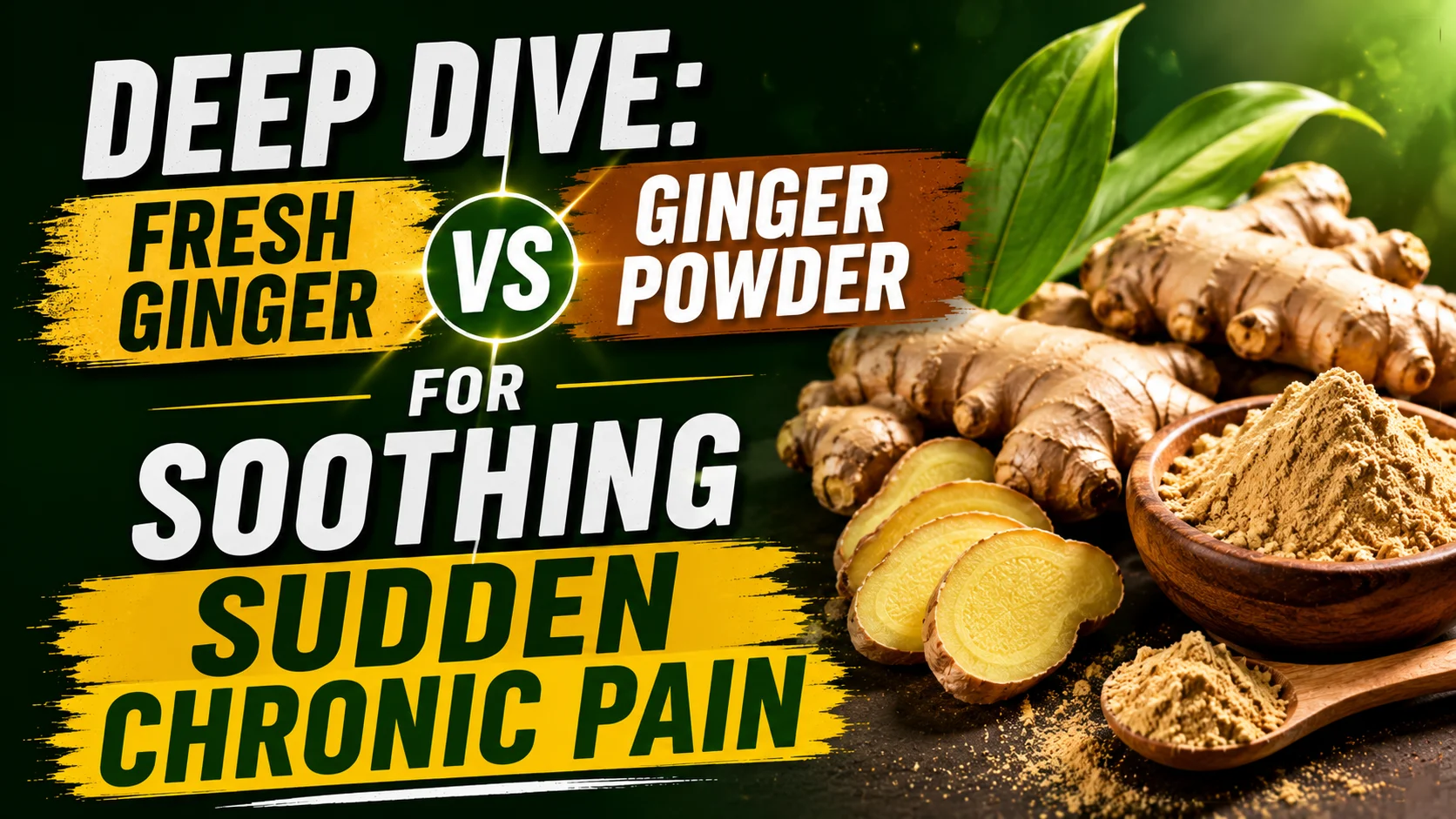
Raw ginger provides a hydrated, milder dose of gingerols that directly targets gut receptors. Conversely, ground ginger powder delivers a highly compressed, intensely spicy blast of shogaols. This makes the dried form highly efficient for chronic joint pain, provided you scale down the quantity correctly.
The Conversion and Potency Baseline
| Feature / Metric | Fresh Ginger Root | Dried Ground Powder |
| Water Content | High (Contains native moisture and juice) | None (100% dehydrated and concentrated) |
| Primary Healing Force | Gingerol (Best for acute digestive comfort) | Shogaol (Best for systemic muscle soreness) |
| Flavor Profile | Sharp, bright, refreshing, and biting | Warm, deeply pungent, earthy, and intense |
| Standard Substitution | 1 Tablespoon (Grated) | $1/4$ Teaspoon (Ground spice) |

The Golden Rule of Conversion: How to Swap Forms
To make your daily wellness transition completely seamless, rely on a strict conversion baseline. Because dehydration drastically magnifies the spice’s potency, a tiny amount of powder matches a large piece of raw root.
If a recipe or health routine calls for 1 tablespoon of freshly grated ginger, you should substitute it with just $1/4$ of a teaspoon of ground ginger powder.
Similarly, if you are looking to swap a 1-inch piece of raw ginger root for an herbal infusion, use $1/2$ of a teaspoon of dry powder. Keeping this mathematical balance exact prevents stomach burning while ensuring you harvest the maximum anti-inflammatory rewards.
Internal Synergy: Pairing Anti-Inflammatory Spices with Clean Fuel
Mastering the balance between ginger vs ginger powder is an incredible asset for your physical performance. However, you cannot out-supplement a diet that causes internal stress. Flooding your digestive system with processed, artificial ingredients completely blocks the cellular healing power of your herbal remedies.
To maximize your physical recovery, focus on cleaning up your nutritional foundation. Start by working closely with a qualified skincare expert who can help you uncover how internal gut irritation impacts your external canvas. You can easily learn how to quit sugar permanently to protect your liver from metabolic overload. Swapping out synthetic corn products for organic healthy sugar alternatives allows your cells to fully absorb the active shogaols in your ginger. This unrefined approach builds a stable foundation that keeps your body completely clear of inflammatory damage.
Foundations for Daily Vitality and Lifelong Radiance
Accelerate your physical healing by anchoring your weekly habits to these simple, powerful routines:
Decongest Your Vital Organs: Protect your liver from toxic fat storage by entirely eliminating modern high fructose corn syrup from your kitchen.
Soothe Your Skin Matrix: Calm painful blemish swelling and redness by unlocking the proven ginger benefits for skin stability and cell repair.
Activate a Nighttime Flush: Speed up your overnight metabolism by drinking a warm detox drink for weight loss at night before bed.
Establish Internal Calm: Lower tissue-damaging stress hormones by following a structured morning routine for healthy skin and a calm mind.
Final Thoughts on Fresh Ginger vs Ginger Powder
In conclusion, understanding how to transition between ginger vs ginger powder empowers you to take absolute control over your health. Fresh ginger root remains an unmatched choice for refreshing morning juices, raw culinary dishes, and immediate stomach relief. Meanwhile, ground ginger powder offers an incredibly convenient, ultra-concentrated solution to battle chronic muscle soreness and tissue inflammation.
Listen carefully to what your physical system requires each day. Combining these smart ingredient conversions with empowering daily wellness rituals every woman should follow ensures you maintain a permanent state of vibrance, energy, and total metabolic balance.
FAQs
Q: Can I use ginger powder instead of fresh ginger to make wellness tea?
A: Yes, absolutely. You can easily prepare a highly effective anti-inflammatory tea using dried ground powder. Because the powder is exceptionally concentrated, stir just $1/4$ to $1/2$ of a teaspoon of ground ginger powder into two cups of boiling water. Let it simmer for 5 minutes, strain it through a fine mesh, and enjoy.
Q: Does ground ginger powder expire or lose its health benefits?
A: Ground ginger powder does not technically spoil, but its active shogaol compounds and aromatic potency will fade over time if exposed to oxygen, light, and heat. For the best anti-inflammatory results, store your dried ginger powder in a tightly sealed glass jar inside a cool, dark pantry, and try to use it within one year.
Q: Which form of ginger is better for curing muscle soreness after a workout?
A: Ground ginger powder has a distinct advantage for post-workout muscle recovery and joint stiffness. The dehydration process multiplies the presence of shogaols, which study data shows are highly effective at blocking systemic inflammatory pathways across your muscle fibers.