Eating nutritious foods and dropping body fat does not require spending large amounts of money on specialty products. Many individuals assume that healthy eating is far too expensive for their monthly budget. However, adopting a structured free budget diet plan helps you organize your weekly shopping while keeping costs low. When you focus on basic whole foods, you nourish your body efficiently without overspending.
Following a clear cheap healthy meal plan removes the stress of buying expensive pre-packaged convenience items. Purchasing staple ingredients in bulk helps keep your weekly grocery bill manageable and predictable. Furthermore, utilizing an affordable weight loss diet ensures that you reach your physical transformation goals without compromising your financial stability.
Why a Free Budget Diet Plan Saves You Money
Eating healthily on a budget relies entirely on smart planning and intentional ingredient selection. Processed snacks, eating out, and pre-cut produce quickly add up during weekly shopping trips. Conversely, a consistent free budget diet plan prioritizes affordable, whole foods that deliver high nutritional value per dollar spent.
Before heading to the grocery store, you can organize your weekly grocery list with a free diet plan PDF to ensure you buy only what you need. Planning your exact meals eliminates impulse buys and reduces wasted food at home. Therefore, relying on an organized free budget diet plan protects both your physical health and your bank account.
Top Low-Cost Foods for an Affordable Weight Loss Diet
Building a budget-friendly menu starts with choosing versatile ingredients available at any local grocery store. A well-designed affordable weight loss diet focuses on nutrient-dense staples that pack plenty of volume for a low price.
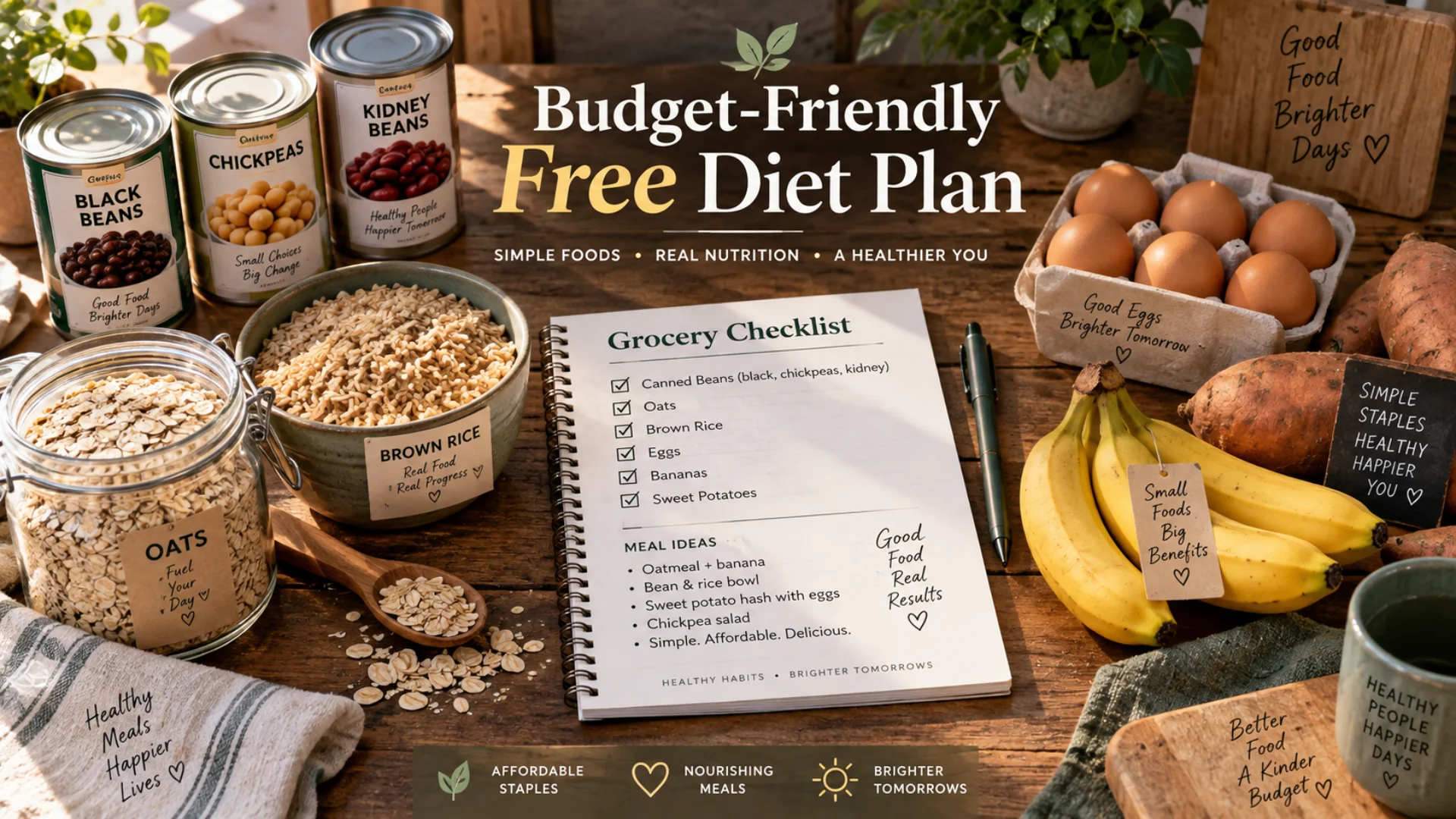
Inexpensive Proteins: Whole eggs, canned tuna, dried lentils, black beans, chickpeas, and cottage cheese provide high-quality amino acids for muscle repair.
Low-Cost Whole Grains: Brown rice, rolled oats, barley, and whole-wheat pasta deliver long-lasting energy without high costs.
Budget-Friendly Produce: Bananas, apples, frozen berries, carrots, cabbage, spinach, and sweet potatoes offer essential fiber and vitamins.
Healthy Fat Staples: Peanut butter, sunflower seeds, and extra virgin olive oil bought in larger bottles offer budget-friendly options.
Incorporating these affordable ingredients into a cheap healthy meal plan keeps your daily meals nutrient-dense, filling, and cost-effective.
Smart Prep Strategies for a Cheap Healthy Meal Plan
Saving money on a healthy diet requires simple kitchen habits that maximize ingredient shelf life and eliminate food waste.
1. Buy Staples in Bulk
Purchasing whole grains, dried legumes, and frozen produce in bulk quantities significantly lowers the cost per serving. Storing dried grains and beans in airtight containers keeps them fresh for months.
2. Cook Big Batches
Prepare large pots of lentil chili, vegetable soups, or grain bowls over the weekend. Portioning these meals into containers provides ready-to-eat lunches and dinners throughout the workweek.
3. Embrace Frozen Vegetables and Fruits
Frozen produce is picked at peak ripeness and processed immediately, preserving essential vitamins and minerals. Frozen options are generally cheaper than fresh produce and will not spoil in your refrigerator.
Following these practical steps ensures that your cheap healthy meal plan stays organized, convenient, and affordable every single week.
Healthy Lifestyle Habits to Support Your Progress
Nutritious eating works best when supported by simple daily practices that improve metabolic efficiency and digestion. Hydration remains a critical element for physical vitality and hunger management. Drinking plenty of water between meals keeps your digestion smooth and prevents mild dehydration signals mistaken for physical hunger. According to dietary guidelines from the U.S. Department of Agriculture, building daily meals around affordable whole foods supports long-term cardiovascular health and metabolic resilience.
Additionally, ensuring seven to eight hours of nightly rest keeps hunger-regulating hormones balanced, preventing expensive late-night takeout cravings. You can also review our main guide on clean eating principles to discover additional natural strategies that complement your budget-friendly routine.
Overcoming Common Budget-Eating Challenges
A common challenge when eating on a budget is avoiding flavor boredom with basic ingredients. Utilizing low-cost herbs, garlic powder, black pepper, hot sauce, and soy sauce adds vibrant flavor to basic grains and lean proteins without adding unnecessary calories or high costs.
Preparing your meals in advance also prevents forced reliance on expensive fast food during busy workdays. Sticking to a structured free budget diet plan keeps your nutrition clean, accelerates fat loss, and keeps your financial goals intact over the long term.
“Legumes and grains offer inexpensive protein; explore our free vegetarian diet plan to see how to structure plant meals.”
“Save even more money by following our beginner’s guide to a free meal prep diet plan.”
Frequently Asked Questions
Q: Is it possible to drop body fat on a cheap healthy meal plan?
A: Yes, fat loss depends on maintaining a safe calorie deficit. Eating affordable whole foods like oats, eggs, lentils, and frozen veggies makes staying in a deficit simple and low-cost.
Q: Are dried beans as healthy as canned beans?
A: Dried beans are just as nutritious as canned beans and cost significantly less per serving. Soaking and boiling them in bulk saves money while providing high-fiber nutrition.
Q: How can I prevent fresh vegetables from spoiling quickly?
A: Buy sturdy vegetables like carrots, cabbage, and sweet potatoes, which last for weeks. You can also mix in frozen produce so nothing goes to waste.
Q: Can I follow a budget diet plan if I have a busy schedule?
A: Absolutely. Batch cooking large portions of rice, beans, and lean meats on Sundays provides quick, prepped meals for your entire workweek.