Ginger remains one of the most widely used natural remedies for supporting digestion and reducing internal inflammation. Whether added to daily teas or cooked into healthy meals, this versatile root delivers potent plant compounds. However, when choosing between ginger vs ginger powder, many people wonder which form contains higher active antioxidants and provides stronger overall health benefits.
The preparation process significantly alters the chemical structure of ginger root. Fresh ginger contains high levels of raw bioactive compounds, whereas dried powdered ginger undergoes heat processing that creates new concentrated antioxidant structures. Understanding these differences allows you to choose the right form for your personal wellness routine.
The Chemical Profiles of Fresh Ginger vs Ginger Powder
The main difference between raw ginger and dried ginger lies in how their primary chemical compounds transform during drying and heating.
▼
▼
1. Fresh Ginger and Bioactive Gingerol
Fresh ginger root is rich in gingerol, the main polyphenol responsible for its pungent aroma and fresh bite. Gingerol is a powerful antioxidant that supports daily immune function, reduces oxidative stress, and calms digestive discomfort.
2. Powdered Ginger and Concentrated Shogaols
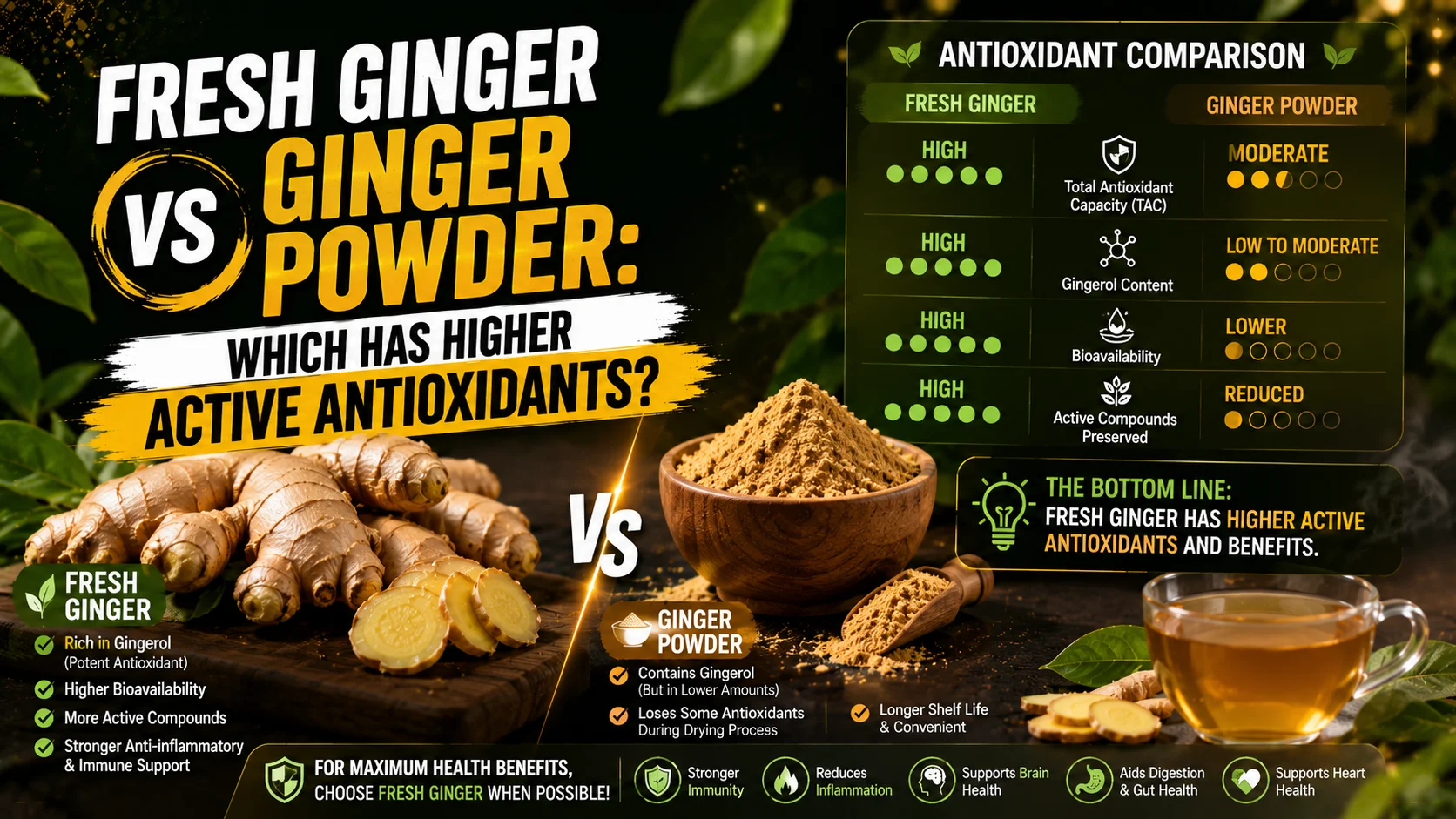
When fresh ginger root is dried and ground into powder, dehydration converts gingerols into shogaols. Shogaols are significantly more potent by weight than gingerols and exhibit strong anti-inflammatory properties. Consequently, powdered ginger vs fresh ginger often yields a higher concentration of certain active antioxidant markers.
Comparing Antioxidant Levels: Fresh Ginger vs Ginger Powder
| Property / Compound | Fresh Ginger Root | Dried Ginger Powder |
| Primary Active Compound | High Gingerol content | High Shogaol content |
| Antioxidant Potency by Weight | Moderate (contains water weight) | Concentrated (water removed) |
| Flavor Profile | Sharp, crisp, and citrusy | Earthy, spicy, and concentrated |
| Best Health Application | Acute nausea and digestion support | Systematic inflammation reduction |
Comparing fresh ginger vs ginger powder demonstrates that both forms provide distinct therapeutic value depending on how you use them.
💡 Enhance Your Daily Digestive Health:
Pair functional botanical ingredients with precision nutrition. Use our free AI Diet Plan Generator right now to compute your exact daily macronutrients and download your customized health roadmap as a PDF.
Health Benefits: Choosing the Right Ginger Form
Selecting between fresh or powdered root depends on your specific wellness priorities.
For Immediate Digestive Relief: Fresh ginger works quickly to relieve nausea, soothe stomach upset, and improve gastric motility after heavy meals.
For Chronic Inflammation Management: Powdered ginger provides a concentrated dose of shogaols, making it ideal for joint comfort and systematic antioxidant defense.
For Convenience and Culinary Storage: Powdered ginger offers a long shelf life without spoiling, while fresh ginger root provides vibrant flavor in cooking.
Supporting Metabolic Function with Natural Compounds
Incorporating functional spices like ginger into your daily diet supports cellular health and digestive efficiency. However, botanical remedies work best when paired with a balanced, biometric-based meal strategy.
To learn more about how warm ginger infusions support gut motility, read our detailed guide on the benefits of ginger tea for digestion. Furthermore, pairing natural anti-inflammatory foods with individual caloric targets maximizes metabolic results. Explore our breakdown on how to get a free AI diet plan tailored to your metrics to establish your proper nutrient baseline.
For local updates or to visit our physical wellness center, check our Beauty and Mindful location profile for updated community health resources.
Simple Ways to Use Ginger Daily
Brew Fresh Ginger Tea: Slice raw ginger root into boiling water for ten minutes to extract rich gingerols for daily digestive comfort.
Add Powder to Morning Smoothies: Mix half a teaspoon of organic ginger powder into green smoothies for a quick antioxidant boost.
Combine Both Forms in Cooking: Use fresh ginger root for aromatic base sauces and powdered ginger for marinades to get the benefits of both compounds.
Store Fresh Root Properly: Keep raw ginger root in the refrigerator or freeze whole pieces to preserve active antioxidants over time.
Frequently Asked Questions
Which has more antioxidants in ginger vs ginger powder?
Powdered ginger often has a higher total antioxidant potency by dry weight because dehydration concentrates the active compounds and converts gingerols into potent shogaols. However, fresh ginger provides higher amounts of raw gingerol.
Can I substitute powdered ginger for fresh ginger in recipes?
Yes. As a general rule, use one-fourth teaspoon of powdered ginger for every tablespoon of freshly grated ginger root, as the powder is much more concentrated in flavor and compound density.
Is fresh ginger better for digestion than ginger powder?
Fresh ginger root is often preferred for acute digestive upset and immediate nausea relief because raw gingerol stimulates digestive enzymes quickly.
Does cooking fresh ginger destroy its antioxidants?
Light heating converts some gingerols into shogaols, which actually increases certain antioxidant properties. However, excessive prolonged boiling can degrade delicate volatile essential oils. Riche Gestoire