Ginger is one of the most widely consumed medicinal spices across the world. Loved for its distinct aroma and sharp bite, this potent root has been a staple in traditional medicine and daily cooking for centuries. However, when standing in the spice aisle, many home cooks face a common question: should you buy fresh ginger root or dried ground ginger? Comparing fresh ginger vs ginger powder reveals significant differences in chemical composition, health benefits, and culinary applications. While both forms originate from the same plant, the drying and dehydrating process fundamentally alters their active bioactive compounds. Understanding these chemical shifts empowers you to make smarter choices for both your kitchen recipes and your health.
Bioactive Profiles: Gingerol vs. Shogaol
The main reason raw ginger tastes vastly different from powdered ginger comes down to chemical transformation during processing.
Raw ginger contains high amounts of gingerol, which is the main bioactive compound responsible for its fresh, fiery taste and cold-relieving properties. Gingerol delivers strong antioxidant effects and aids in digestive enzyme activity.
When fresh ginger is dehydrated to make powder, heat transforms gingerol into shogaol. Shogaol is significantly more concentrated and pungent than gingerol:
Fresh Ginger Root (High Gingerol): Ideal for soothing acute digestive distress, reducing temporary nausea, and providing a crisp, sharp flavor to fresh juices and stir-fries.
Ginger Powder (High Shogaol): Possesses stronger anti-inflammatory and pain-relieving properties. It is particularly effective for chronic joint discomfort and systemic muscle soreness.
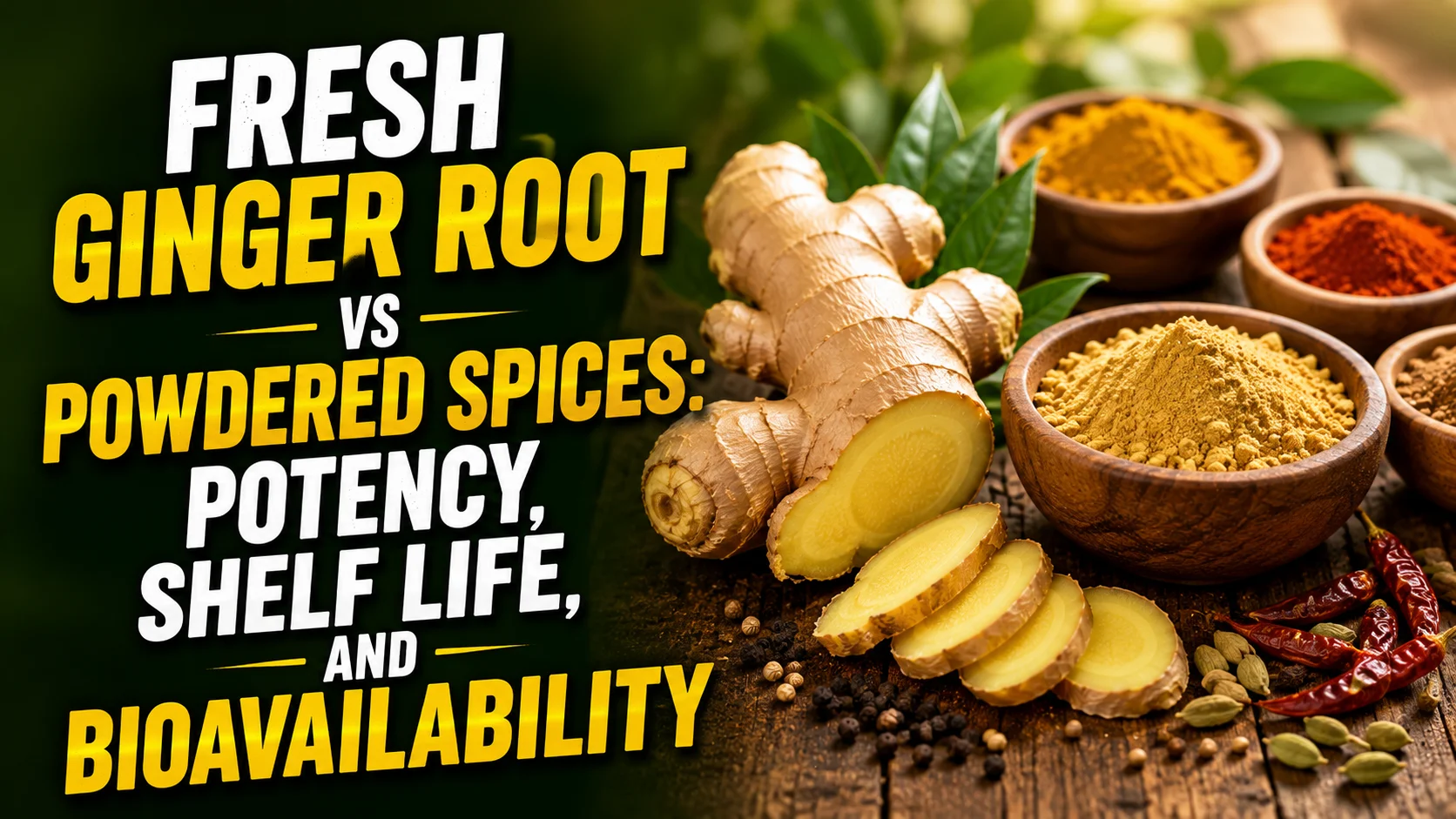
Comparing Potency, Shelf Life, and Bioavailability
Both forms offer unique practical advantages depending on your daily routine. Examining ginger root bioavailability helps determine which option suits your specific wellness goals.
| Feature / Metric | Fresh Ginger Root | Dried Ginger Powder |
| Primary Bioactive Compound | Gingerol (Fresh, raw state) | Shogaol (Heat-dehydrated state) |
| Typical Shelf Life | 2–3 weeks (Refrigerated) | 1–2 years (Airtight container) |
| Digestive Absorption | High water content; easy on stomach | Concentrated; absorbs rapidly |
| Best Culinary Use | Marinades, teas, fresh stir-fries | Baking, dry rubs, spice blends |
Practical Tips for Cooking with Ginger Powder and Fresh Root
Knowing how to substitute one form for another is essential for consistent culinary results. Because dried spices are far more concentrated than raw roots, you should adjust your recipe measurements carefully.
1. The Standard Conversion Ratio
As a general rule, use 1/4 teaspoon of ginger powder to replace 1 tablespoon of freshly grated ginger root. Using too much powdered spice can easily overpower your dish with intense bitterness.
2. Cooking with Ginger Powder for Long Simmers
When preparing slow-cooked stews, curries, or baked goods, ground ginger is superior. It withstands prolonged heat without losing its deep flavor or degrading its shogaol content.
3. Adding Fresh Ginger at the End of Cooking
To preserve the volatile essential oils and gingerol in fresh root, add it near the end of cooking. Grating raw ginger into a warm stir-fry right before serving delivers maximum aromatic punch and digestive support.
Simple Steps to Preserve Fresh Ginger at Home
Fresh ginger root can spoil quickly if stored incorrectly. Follow these simple steps to extend its usable life:
Refrigerate in a Paper Bag: Store unpeeled ginger root in a breathable paper bag inside your refrigerator crisper drawer for up to three weeks.
Freeze Whole Roots: Place whole, unpeeled ginger roots into an airtight freezer bag. Frozen ginger stays fresh for up to six months and can be microplaned directly into dishes without thawing.
Submerge in Lemon Juice: Store peeled ginger slices in a clean glass jar filled with fresh lemon juice in the fridge to prevent oxidation and mold growth.
Integrating Medicinal Spices into a Clean Lifestyle
Choosing between fresh ginger vs ginger powder ultimately depends on your culinary needs and health priorities. Using fresh root gives you hydrating gingerol for instant digestion, while ground spice delivers concentrated shogaol for deep inflammatory relief.
To discover how whole botanical ingredients soothe sensitive skin and calm facial redness, explore the best organic skincare products for sensitive skin.
Furthermore, maintaining peak vitality requires aligning your diet with your metabolic profile. Use our free AI diet plan generator to calculate your exact daily macronutrients in seconds.
For local health updates, explore our Beauty and Mindful location profile.
Frequently Asked Questions
Is fresh ginger vs ginger powder better for health?
Both forms offer exceptional benefits. Fresh ginger contains higher gingerol levels for digestive ease and nausea relief. Meanwhile, ground ginger features concentrated shogaol, which provides stronger anti-inflammatory support.
Can I substitute ground ginger for fresh ginger root in recipes?
Yes. You can substitute fresh ginger with ground spice easily. Use 1/4 teaspoon of dried ginger powder for every 1 tablespoon of freshly grated ginger root called for in your recipe.
Does cooking destroy the health benefits of fresh ginger?
Prolonged high heat can reduce gingerol levels in raw ginger. However, heat converts gingerol into shogaol, which actually enhances certain anti-inflammatory compounds.
What is the best way to increase ginger root bioavailability?
Consuming ginger alongside warm water or healthy fats improves compound absorption. Additionally, grating or finely mincing fresh ginger releases its essential oils for better digestion.